Custom PC Building Guide: Step-by-Step Instructions for Building Your Dream Gaming Rig
Digital Revolution
As technology continues to evolve at a rapid pace, it's crucial to stay up-to-date with the latest trends and innovations shaping our digital landscape. In this tech blog, we'll explore some of the most exciting developments across various domains, from artificial intelligence and blockchain to augmented reality and quantum computing. Join us on this journey into the future as we delve into the fascinating world of technology.
Artificial Intelligence (AI) Revolution:Artificial Intelligence has already made significant strides, but its potential is far from being fully realized. Explore the latest breakthroughs in AI, including natural language processing, computer vision, and deep learning. Discover how AI is transforming industries such as healthcare, finance, and transportation, and the ethical considerations that come with its growing prominence.
Blockchain Beyond Cryptocurrencies:While blockchain technology gained initial recognition through cryptocurrencies like Bitcoin, its applications extend far beyond digital currencies. Explore how blockchain is revolutionizing supply chain management, healthcare records, voting systems, and even the art world. Dive into the potential of decentralized finance (DeFi) and the rise of non-fungible tokens (NFTs) as they reshape traditional industries.
Augmented Reality (AR) and Virtual Reality (VR) in Everyday Life:AR and VR technologies are no longer limited to gaming and entertainment. Discover how they are transforming various sectors, including education, healthcare, architecture, and e-commerce. Learn about the latest advancements in AR glasses, virtual meeting platforms, and immersive experiences that bridge the gap between physical and digital realities.
Complexity
Quantum Computing's Quantum Leap:Quantum computing holds immense promise for solving complex problems that are currently intractable for classical computers. Delve into the fundamentals of quantum computing and its potential impact on cryptography, drug discovery, optimization, and more. Explore the progress made by industry leaders and the race to develop practical quantum computers.
Edge Computing: Powering the Internet of Things (IoT):As the number of connected devices continues to skyrocket, the demand for efficient data processing is driving the growth of edge computing. Learn how edge computing improves latency, security, and bandwidth utilization in IoT applications. Explore real-world examples, such as smart cities, autonomous vehicles, and industrial automation, where edge computing is making a significant impact.
As technology continues to evolve at a rapid pace, it's crucial to stay up-to-date with the latest trends and innovations shaping our digital landscape. In this tech blog, we'll explore some of the most exciting developments across various domains, from artificial intelligence and blockchain to augmented reality and quantum computing. Join us on this journey into the future as we delve into the fascinating world of technology.
Conclusion:
The future of technology is brimming with possibilities. From AI's transformative power to blockchain's decentralized potential, and from the immersive experiences of AR and VR to the mind-bending potential of quantum computing, these trends are reshaping our world. Stay informed, embrace the change, and be prepared to witness the exciting innovations that lie ahead. Join us on this tech blog as we continue to explore the frontiers of technology and its impact on society.
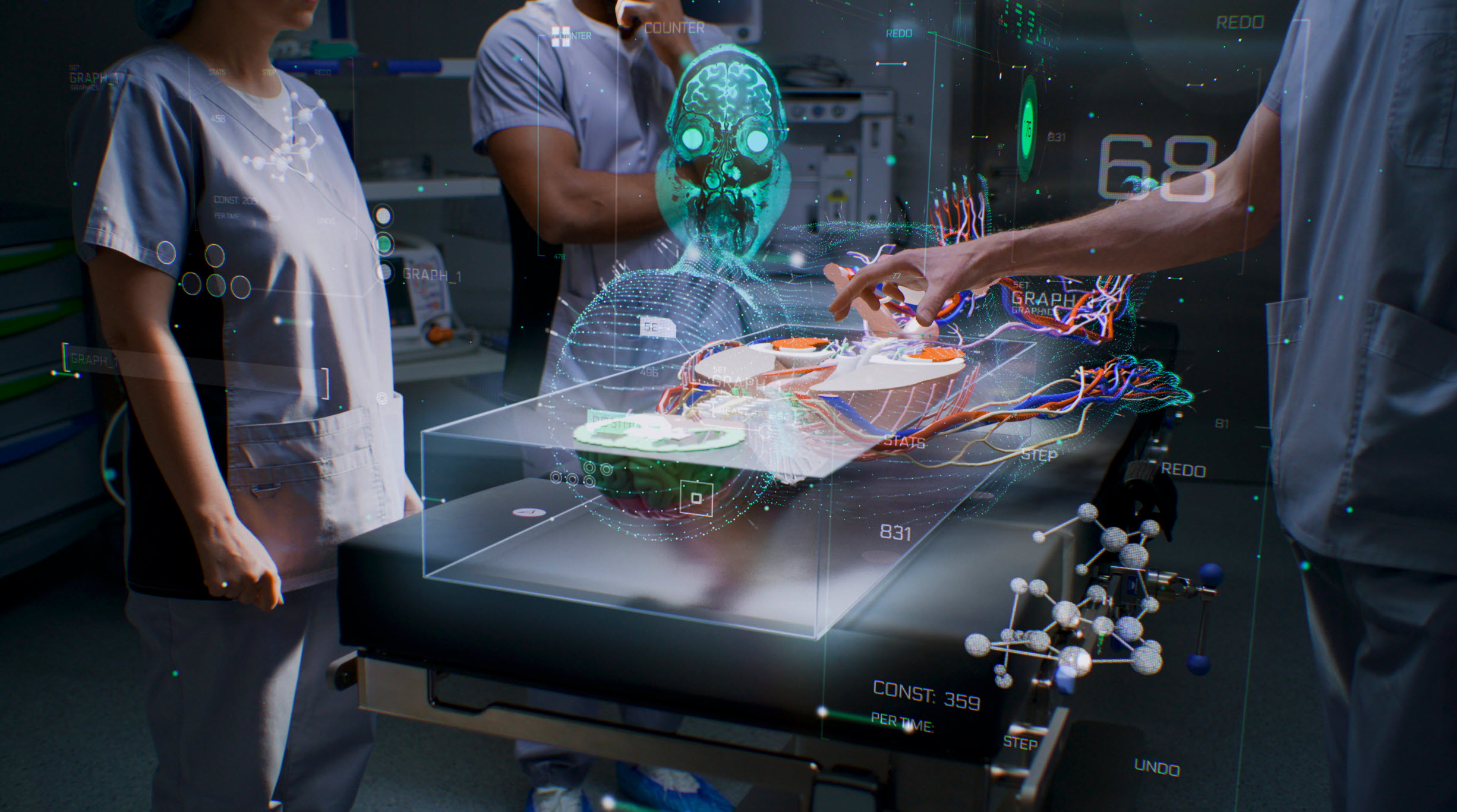
The global medical animation market is projected to grow rapidly from $1.03 billion in 2025 to $4.59 billion by 2032, driven by a strong 23.82 percent CAGR. This growth is fueled by rising demand for high-quality visual communication in healthcare, increased use of animated content for patient education, clinical training, and product marketing, and the accelerating adoption of AI, VR/AR, and cloud-based production technologies. 3D animation continues to dominate due to its accuracy and impact, with major users including hospitals, universities, pharmaceutical companies, and medical device manufacturers. While North America leads today, Asia-Pacific is the fastest-growing region. Despite challenges such as rising production costs and the need for scientific accuracy, medical animation is becoming a core component of digital health, positioning the industry for sustained expansion through 2032.
Midjourney's new Video V1 model, alongside features like Omni-Reference, Personalization Profiles, Style References, and Draft Mode, allows users to easily create and animate personalized, dynamic visuals, even on a $10 basic plan.
Earlier this year, Pimax introduced the Crystal Super alongside Crystal Light, featuring advanced capabilities such as eye-tracking, automatic IPD adjustment, and interchangeable display modules and lenses for varied resolutions and FOVs. Initially anticipated to match its predecessors in size, Pimax later announced a 30 percent reduction in external dimensions for a more compact design. The headset is still in early development, showcased through non-functional prototypes and renders, with early footage utilizing older Pimax technology.
The global medical animation market is projected to grow rapidly from $1.03 billion in 2025 to $4.59 billion by 2032, driven by a strong 23.82 percent CAGR. This growth is fueled by rising demand for high-quality visual communication in healthcare, increased use of animated content for patient education, clinical training, and product marketing, and the accelerating adoption of AI, VR/AR, and cloud-based production technologies. 3D animation continues to dominate due to its accuracy and impact, with major users including hospitals, universities, pharmaceutical companies, and medical device manufacturers. While North America leads today, Asia-Pacific is the fastest-growing region. Despite challenges such as rising production costs and the need for scientific accuracy, medical animation is becoming a core component of digital health, positioning the industry for sustained expansion through 2032.
Midjourney's new Video V1 model, alongside features like Omni-Reference, Personalization Profiles, Style References, and Draft Mode, allows users to easily create and animate personalized, dynamic visuals, even on a $10 basic plan.
Earlier this year, Pimax introduced the Crystal Super alongside Crystal Light, featuring advanced capabilities such as eye-tracking, automatic IPD adjustment, and interchangeable display modules and lenses for varied resolutions and FOVs. Initially anticipated to match its predecessors in size, Pimax later announced a 30 percent reduction in external dimensions for a more compact design. The headset is still in early development, showcased through non-functional prototypes and renders, with early footage utilizing older Pimax technology.
Emma Collins
August 2, 2024
•
5 min read
Emma Collins
With 20 years of experience in medical animation, Emma Collins is a distinguished expert in translating complex medical concepts into visually compelling and educational animations.
The global medical animation market is projected to grow rapidly from $1.03 billion in 2025 to $4.59 billion by 2032, driven by a strong 23.82 percent CAGR. This growth is fueled by rising demand for high-quality visual communication in healthcare, increased use of animated content for patient education, clinical training, and product marketing, and the accelerating adoption of AI, VR/AR, and cloud-based production technologies. 3D animation continues to dominate due to its accuracy and impact, with major users including hospitals, universities, pharmaceutical companies, and medical device manufacturers. While North America leads today, Asia-Pacific is the fastest-growing region. Despite challenges such as rising production costs and the need for scientific accuracy, medical animation is becoming a core component of digital health, positioning the industry for sustained expansion through 2032.
Midjourney's new Video V1 model, alongside features like Omni-Reference, Personalization Profiles, Style References, and Draft Mode, allows users to easily create and animate personalized, dynamic visuals, even on a $10 basic plan.
Earlier this year, Pimax introduced the Crystal Super alongside Crystal Light, featuring advanced capabilities such as eye-tracking, automatic IPD adjustment, and interchangeable display modules and lenses for varied resolutions and FOVs. Initially anticipated to match its predecessors in size, Pimax later announced a 30 percent reduction in external dimensions for a more compact design. The headset is still in early development, showcased through non-functional prototypes and renders, with early footage utilizing older Pimax technology.
Emma Collins
August 2, 2024
•
5 min read
Get the Latest Medical Animation & Marketing Technology Updates
Get the latest news from reliable sources coming directly from medial marketing and 2D and 3D animation industries.
Thank you! Your submission has been received!
Oops! Something went wrong while submitting the form.